
 Written by
 Depression is one of the most misunderstood experiences a human being can go through. From the outside, it can look like laziness, ingratitude, or simply “being in a bad mood.” From the inside, it feels like carrying an invisible weight that nobody else can see, a heaviness that makes even the simplest tasks feel impossibly distant. You might not even have a name for what you are experiencing. You may just know that something is deeply, persistently wrong.
This guide is written for people who are quietly struggling, who may not yet be ready or able to access professional help, or who want to understand what they are experiencing and take meaningful steps forward. Knowing what depression looks like and having practical tools to respond to it can make a genuine difference, not as a replacement for professional care, but as a foundation you can begin building today.
What Depression Actually Feels Like
Popular culture tends to reduce depression to intense sadness and tears, but the reality of depression is far more varied and often far less visible than that. Many people living with depression do not cry frequently at all. Instead, they describe a peculiar emotional flatness, a numbness that drains color from experiences that once brought them joy or meaning.
Depression can feel like waking up exhausted after a full night of sleep and having no explanation for it. It can feel like watching your life from behind glass, present in the room but somehow disconnected from everything happening in it. It can look like irritability, not sadness. It can feel like a persistent fog sitting over your thoughts, making decisions, concentration, and memory unexpectedly difficult.
Understanding that depression wears many faces is the first step toward recognizing it honestly, both in yourself and in the people around you.
The Warning Signs Worth Taking Seriously
Depression rarely announces itself dramatically. It tends to arrive gradually, through a quiet accumulation of changes that can easily be dismissed individually but speak a clear language when viewed together.
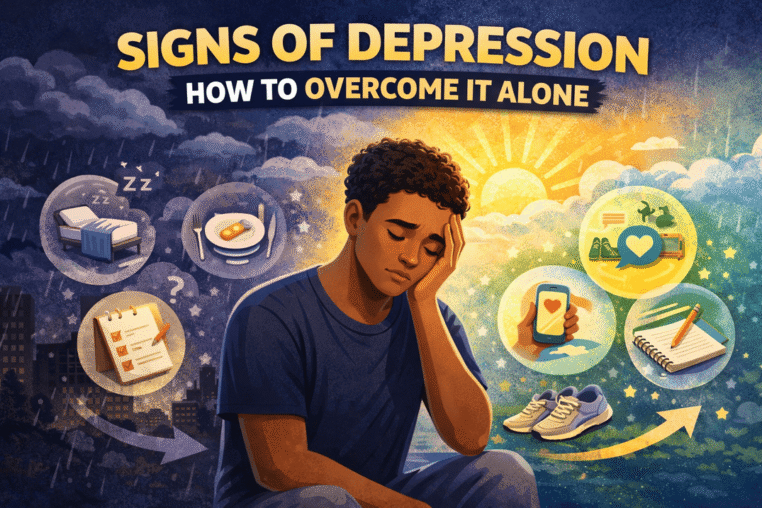
Persistent low mood: A deep, enduring sadness or emptiness that lingers for two weeks or longer without a clear or proportionate external cause is one of the most consistent markers of depression.
Loss of interest in things you used to enjoy: Hobbies, friendships, creative pursuits, or activities that once felt meaningful begin to feel flat and unimportant. This symptoms, called anhedonia, is one of the most telling indicators that something beyond ordinary stress is occurring.
Disrupted sleep patterns: Depression commonly disrupts sleep in one of two directions, either making it nearly impossible to stay asleep through the night, or producing an overwhelming urge to sleep far more than usual without feeling rested.
Changes in appetite and weight: Eating significantly more or less than usual without intentionally trying to change your diet can reflect the disruption depression creates in your body’s regulatory systems.
Persistent fatigue: A bone-deep tiredness that does not respond to rest, making even small tasks feel physically and mentally draining.
Feelings of worthlessness or excessive guilt: A harsh, relentless inner critic that holds you responsible for things beyond your control or frames your value as a person in deeply negative terms.
Difficulty thinking clearly: Slowed thinking, poor concentration, indecisiveness, and a noticeably reduced ability to process information or complete tasks that were once routine.
Withdrawal from others: A growing desire to retreat from social interaction, cancel plans, avoid conversations, and be alone, not out of preference but out of a sense of inability to engage.
Having the thought of hope lost or death: A constant agreement that something will not get better, or harboring thinking concerning dying or not wanting to stay alive. If you are experiencing these thoughts, please reach out for immediate professional support.
Sadness Versus Depression: Knowing the Difference
Grief, disappointment, and emotional pain are a natural part of being human, and it is important not to pathologist every difficult feeling. Sadness typically arises in response to a specific loss or event, fluctuates in intensity, and gradually lifts as circumstances shift or time passes.
Depression is distinguished not by its emotional content but by its duration, its resistance to comfort, its breadth across multiple areas of life, and its disconnection from external triggers. When low mood and loss of function persist for more than two weeks, affect multiple areas of life simultaneously, and do not respond to positive events or changes in circumstance, seeking clarity from a professional becomes genuinely important.
Daily Habits That Create a Foundation for Recovery
While depression can make even getting out of bed feel like climbing a mountain, certain daily habits have strong evidence behind them as supports for emotional recovery. The goal is not to do all of these at once but to begin with one or two that feel most manageable.
Maintain a daily routine: Depression thrives in unstructured time. A loose but consistent daily schedule, even a simple one with fixed times for waking, eating, and a short productive activity, provides your nervous system with the predictability it needs to begin stabilizing.
Set one small, achievable intention each day: Rather than overwhelming yourself with a long list of tasks, identify one specific, modest thing you will accomplish today. Completing it, however small, creates a genuine sense of agency that accumulates into momentum over time.
Spend time in natural light: Light exposure, particularly morning sunlight, plays a documented role in regulating mood through its effect on serotonin production and circadian rhythm. Even fifteen minutes of morning light exposure can meaningfully support your emotional baseline.
Engage in physical movement: Exercise is one of the most consistently studied and supported non-clinical interventions for depression. It does not need to be intense or lengthy, a 20-minute walk outside engages the brain’s reward system, reduces stress hormones, and interrupts the cycle of inactivity that depression reinforces. Start where you are and move a little more each day.
Addressing the Thoughts That Depression Generates
One of depression’s most insidious features is the way it distorts thinking. It filters your perception of yourself, your past, your present, and your future through a systematically negative lens, generating thoughts that feel completely true but are, in fact, symptoms of the illness rather than objective reflections of reality.
Common depressive thought patterns include all-or-nothing thinking (viewing situations in absolute terms), catastrophizing (assuming the worst outcome is inevitable), personalizing (blaming yourself for things outside your control), and filtering (focusing entirely on negatives while dismissing anything positive).
When you notice one of these thought patterns arising, try to engage with it the way a fair and rational outside observer would. Ask yourself: Would I say this to a friend in the same situation? What evidence actually supports this thought? What evidence contradicts it? Is there a more balanced way of viewing this situation?
This practice of gently questioning depressive thoughts rather than automatically accepting them as truth is the foundation of Cognitive Behavioral Therapy and is something you can begin practicing independently.
Connection as Medicine
Depression sends a powerful message to isolate, to cancel plans, avoid conversation, and retreat inward. Listening to this message, while understandable, tends to deepen and prolong the depressive episode rather than alleviate it. Human connection, even in small and simple forms, is genuinely therapeutic.
You do not need to explain everything you are going through to benefit from the presence of other people. A brief conversation with a neighbor, sitting in a shared space rather than staying home alone, sending a short message to someone you trust, or joining a low-pressure community activity can all provide a degree of social nourishment that counteracts isolation’s amplifying effect on depression.
If reaching out to people in your life feels too difficult right now, online peer support communities for depression, moderated spaces where people share experiences honestly without judgement, can offer a meaningful sense of being seen and understood.
Self-Compassion: The Habit Most People Skip
One of the most powerful and most consistently overlooked tools in depression recovery is the deliberate practice of treating yourself with the same kindness and patience you would extend to someone you genuinely care about.
Depression often comes packaged with intense self-criticism, shame, and a deep sense of being broken or inadequate. Pushing against depression through willpower and self-pressure frequently backfires, adding a layer of guilt about being depressed on top of the depression itself. Self-compassion, acknowledging your suffering without judgement, recognizing that struggle is part of shared human experience, and offering yourself warmth rather than criticism, has been shown to reduce the intensity of depressive symptoms and support emotional resilience over time.
Each morning, before the inner critic has a chance to start its commentary, try placing one hand on your chest and quietly acknowledging: I am having a hard time. This is genuinely difficult. I deserve patience and care. It may feel awkward at first. Do it anyway.
When Going It Alone Is Not Enough
Taking personal steps to address depression is courageous and genuinely helpful, but it is equally important to be honest with yourself about the limits of self-help. Clinical depression is a medical condition with biological, psychological, and social dimensions. For many people, professional support is not an optional extra but a necessary component of meaningful recovery.
If your symptoms have persisted for several weeks without improvement, are significantly interfering with your ability to work, maintain relationships, or care for yourself, or if you are experiencing any thoughts of self-harm or not wanting to be alive, reaching out to a doctor, therapist, or counsellor is the most important step you can take.
Therapy, particularly Cognitive behavioral Therapy and Interpersonal Therapy, has strong clinical evidence for effectiveness in depression treatment. Your GP or primary health physician is also a valuable first point of contact who can assess your situation, rule out physical contributors, and guide you toward appropriate support.
Seeking help is not failure. It is the most self-aware and self-respecting decision you can make.
Conclusion
Depression lies to you constantly. It tells you that nothing will help, that you are beyond care, that reaching out is pointless, and that this is simply who you are now. None of that is true.
Recovery from depression, whether through personal habits, professional support, or a combination of both, is real and it is possible. The path is rarely straight and the pace is rarely fast, but every single step you take toward understanding yourself, treating yourself with compassion, and building habits that support your well-being is a step away from where you are now and toward something better.
You are not broken. You are struggling with something genuinely hard. That is a very different thing, and it matters.