
 Written by
 A medical condition that refers to inflammation of the liver is known as hepatitis, an important body part that is in charge of Removing harmful substances from the body, digestion, and nutrient storage for body use. Among the most familiar types are Hepatitis A, Hepatitis B, and Hepatitis C.
Even though, they all affect the liver, these three types differ Considerably in how they are transferred, how severe they are, and how they are cured. Having knowledge of these differences is essential for protection, quick discovery, and proper control.
This article gives a vivid Evaluation of Hepatitis A, B, and C to help you stay enlightened and preserved.
What Is Hepatitis?
Hepatitis simply means pain from the liver by injury or irritation. It can happen by infectious agent, hard drinks, harmful substances, or autoimmune situation. Viral hepatitis (A, B, and C) is the most familiar form all over the world and poses an important public health concern.
Overview of Hepatitis A, B, and C
Hepatitis A
Hepatitis A is a short-period (acute) liver infection caused by the hepatitis A infectious agent (HAV). It does not lead to deadly disease and usually subside on it own.
Hepatitis B
Hepatitis B happens by the hepatitis B infectious agent (HBV). It can either be acute or deadly and may lead to severe liver issues if attention is not paid to it.
Hepatitis C
Hepatitis C is created by the hepatitis C infectious agent (HCV). It is often lasting and can silently destroy the liver over long period.
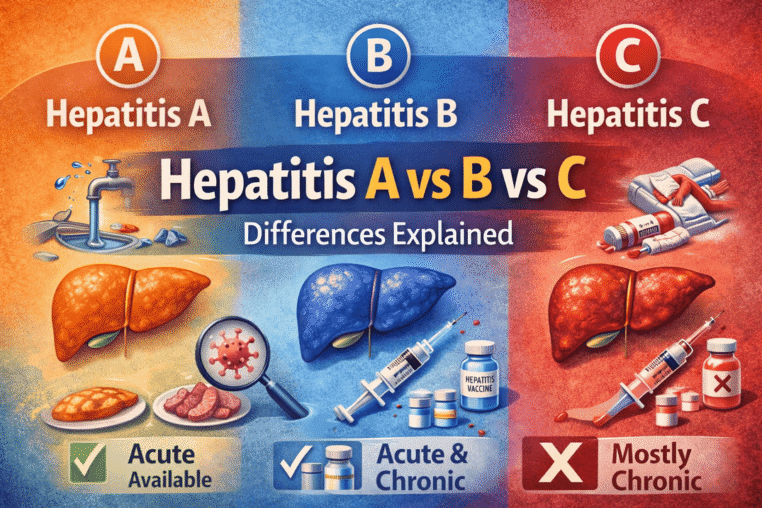
Key Differences Between Hepatitis A, B, and C
1. Mode of Transmission
- Hepatitis A: Circulate by unsafe food and water.
- Hepatitis B: Circulate by connection with affected blood, semen, or body fluids (e.g., unprotected sex, shared needles).
- Hepatitis C: Mainly circulate by infected blood, especially via shared needles or improper medical routines.
2. Duration of Infection
- Hepatitis A: Short-period; does not become severe
- Hepatitis B: Can be acute or severe
- Hepatitis C: usually becomes severe if unattented to
3. Severity and Complications
- Hepatitis A: Usually slight; rarely comes serious issues
- Hepatitis B: may lead to severe liver disease, cirrhosis, or liver cancer
- Hepatitis C: High risk of severe liver destruction, cirrhosis, and liver cancer
4. Symptoms
Common symptoms across all three types may include:
- tiredness
- Nausea and throwing up
- Abdominal complication
- Jaundice
- Dark colored urine
However:
- Hepatitis A signs shows fast
- Hepatitis B and C may stay silent for many years
5. Availability of Vaccines
- Hepatitis A: Vaccine accessible and efficient
- Hepatitis B: Vaccine accessible and broadly used
- Hepatitis C: No vaccine presently accessible
6. Treatment Options
- Hepatitis A: helpful care (rest, hydration, nutrition)
- Hepatitis B: Antiviral treatment to regulate the infectious agent
- Hepatitis C:Recent antiviral medication can treat most situations
Prevention Tips
Preventing Hepatitis A
- Wash your hands frequently
- consume clean and safe water
- Eat appropriately prepared meal
- Get immunized
Preventing Hepatitis B and C
- Indulge in safe sex only (use condoms )
- Abstain from sharing personnel items like needles or sharp objects
- Make sure for proper blood transfusions
- Use sterilized medical tools only
- Get immunized(for Hepatitis B)
Why Early Detection Matters
A lot of people with Hepatitis B and Hepatitis C do not notice any signs until serious liver destruction has occurred. Regular check up, specifically for high-risk persons, can help find the disease early and enhance treatment results.
Living With Hepatitis
If identified with any form of hepatitis:
- Adhere to your doctor’s advice
- Keep a healthy eating habits
- Avoid hard drinks
- Track liver health frequently
With adequate care, many individuals stay long, healthy lives even with advanced stage hepatitis.
Conclusion
Even though Hepatitis A, Hepatitis B, and Hepatitis C all sway the liver, they vary largely in spreading, severity, and long-period effect. Hepatitis A is usually moderate and temporary, while Hepatitis B and C can lead to deadly disease and serious issues.
Having knowledge of the differences enable you to take protective procedures, seek the attention of a medical personnel regularly , and look after your overall health.