 Written by
 Anxiety is one of the most widespread mental health challenges people face today, touching millions of lives across every age group, profession, and background. While medication plays an important and legitimate role in treatment for some individuals, many people actively seek natural, sustainable approaches that do not rely on pharmaceuticals. Whether you are dealing with everyday worry, social nervousness, or persistent tension that weighs on your daily life, there are powerful, evidence-backed strategies you can adopt right now to take back control of your mental space.
This article explores the most effective drug-free methods for managing anxiety, practical tools you can begin using immediately, without a prescription.
Understand Your Anxiety Before You Fight It
One of the most underrated first steps in managing anxiety is simply learning to understand it. Anxiety is your body’s natural alarm system, a biological response designed to protect you from perceived danger. The problem arises when that alarm fires too frequently, too intensely, or without a genuine threat present.
When you begin to see anxiety as a signal rather than a sentence, you shift from being overwhelmed by it to being curious about it. Ask yourself: What is this feeling trying to protect me from? Is the threat real or imagined? This moment of honest self-inquiry does not eliminate the anxiety immediately, but it creates space between the feeling and your reaction, and that space is where your power lives.
Use Controlled Breathing to Interrupt the Anxiety Cycle
Your breath is the single most immediate tool you carry everywhere, and it has a profound effect on your nervous system. When anxiety spikes, your breathing naturally becomes shallow and rapid, which signals the brain to remain on high alert. Reversing that pattern consciously can calm your entire system within minutes.
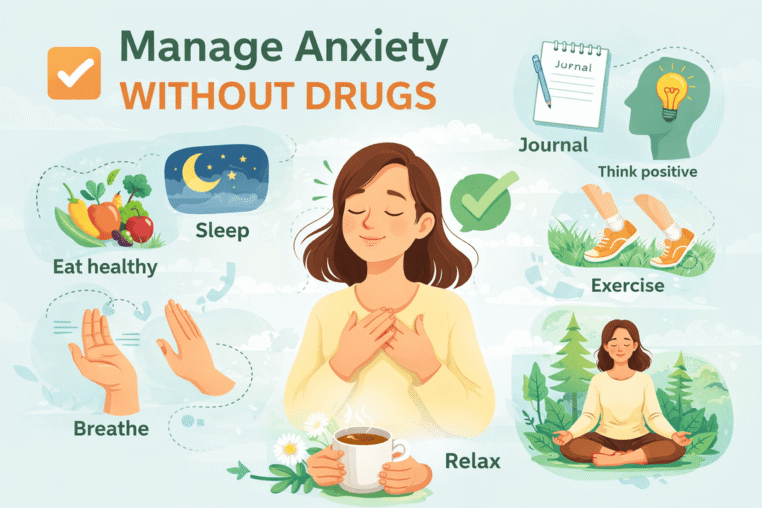
One highly effective technique is the 4-7-8 method: inhale quietly through your nose for four counts, hold your breath for seven counts, then exhale completely through your mouth for eight counts. Repeat this cycle three to four times. The extended exhale activates the parasympathetic nervous system, your body’s built-in rest-and-calm mode, which directly counters the stress response driving your anxiety.
Box breathing is another popular approach used by military personnel and therapists alike: inhale for four counts, hold for four, exhale for four, hold for four. Practice either technique daily, not only during moments of panic, to build long-term regulation.
Move Your Body Consistently
Physical exercise is one of the most clinically supported non-pharmaceutical interventions for anxiety. When you engage in regular movement, whether walking, jogging, cycling, dancing, swimming, or strength training, your brain releases endorphins, serotonin, and dopamine, all of which contribute to improved mood and reduced tension.
You do not need to train like an athlete to see meaningful results. A brisk 30-minute walk five times a week has been shown in multiple research settings to significantly lower anxiety symptoms over time. The key is consistency. Exercise also improves sleep quality and builds a sense of physical confidence, both of which further reduce anxiety’s grip on your daily experience.
Practice Mindfulness and Present-Moment Awareness
Anxiety lives predominantly in the future, in the catastrophic “what ifs” and worst-case scenarios your mind generates. Mindfulness is the deliberate practice of anchoring your attention to the present moment, and it is one of the most transformative habits you can develop for long-term anxiety management.
Begin with just five minutes a day. Sit comfortably, close your eyes, and bring your full attention to your breath. When thoughts arise, and they will, simply notice them without judgement and gently guide your focus back. Over time, this trains your brain to engage the thinking mind less reactively, reducing the frequency and intensity of anxious thought spirals.
Guided meditation apps, free audio recordings, and YouTube videos make mindfulness accessible to virtually anyone, regardless of experience or background.
Establish a Sleep Routine That Actually Works
Sleep deprivation and anxiety share a deeply cyclical relationship, poor sleep intensifies anxious thoughts, and anxiety makes restful sleep harder to achieve. Breaking this cycle requires deliberate attention to your sleep hygiene.
Set a consistent bedtime and wake-up time every day, including weekends. Dim the lights in your home at least an hour before sleep, avoid screens in the final 30 to 60 minutes before bed, and keep your bedroom cool, dark, and quiet. Avoid caffeine after midday, and resist the urge to scroll through news or social media right before sleeping, both are powerful anxiety amplifiers when consumed at night.
A calming pre-sleep ritual, light stretching, journaling, reading a physical book, or simply sitting in quiet, trains your nervous system to wind down reliably each evening.
Write It Out: The Power of Journaling
Anxiety often intensifies when thoughts remain trapped inside your head, circling endlessly without resolution. Journaling externalized those thoughts, giving them form and allowing your rational mind to engage with them more clearly.
Each morning or evening, spend ten minutes writing freely, whatever is on your mind, without editing or censoring yourself. You can also try a structured gratitude journal, listing three specific things you are genuinely thankful for each day. Gratitude practice has a measurable impact on overall mental well-being and creates a counterbalance to the negativity bias that anxiety tends to amplify.
Rethink What You Eat and Drink
Your gut and your brain are in constant communication through what scientists call the gut-brain axis, and what you consume daily has a measurable effect on your anxiety levels. Excess sugar causes blood glucose spikes and crashes that mimic anxiety symptoms. Caffeine stimulates the nervous system and can trigger or worsen panic-like feelings in sensitive individuals. Alcohol, despite its short-term calming effect, disrupts sleep architecture and often increases anxiety the following day.
On the supportive side, foods rich in magnesium, such as dark leafy greens, pumpkin seeds, and bananas, help regulate the nervous system. Omega-3 fatty acids found in oily fish support brain health and mood stability. Staying well-hydrated is equally important, as even mild dehydration has been linked to heightened feelings of tension and irritability.
Build Strong Social Connections
Human beings are wired for connection, and isolation is one of anxiety’s most powerful fuel sources. Investing in meaningful relationships, even one or two close friendships, creates a buffer against chronic stress and gives you a healthy outlet for processing difficult emotions.
This does not mean you need to be socially extroverted or surround yourself with crowds. It simply means nurturing the connections that feel safe and reciprocal. Share what you are going through with someone you trust. Join a community group, hobby class, or support circle where authentic interaction is encouraged. Being heard and understood by another person is one of the most deeply calming experiences available to any human being.
Limit News Consumption and Social Media Exposure
In an age of constant information flow, the 24-hour news cycle and endlessly scrolling social media feeds have become significant sources of ambient anxiety for many people. Negative headlines, comparison culture, and the addictive design of most social platforms keep the nervous system in a perpetual state of low-grade alertness.
Set deliberate boundaries around your media consumption. Designate specific times for checking news rather than leaving it running in the background all day. Unfollow accounts that consistently leave you feeling inadequate, fearful, or drained. Protecting your mental environment is not avoidance, it is an act of genuine self-care.
When Professional Support Is the Right Step
Managing anxiety without medication is entirely possible for many people, but it is equally important to recognize when professional guidance is necessary. If your anxiety is severely disrupting your ability to work, maintain relationships, sleep, or function in daily life, reaching out to a licensed therapist, counsellor, or psychologist is a sign of strength, not weakness.
Cognitive Behavioral Therapy (CBT), in particular, has an exceptionally strong track record as a drug-free treatment for anxiety disorders. A qualified professional can help you identify the thought patterns driving your anxiety and equip you with personalized tools to address them at their root.
Conclusion
Managing anxiety without drugs is not about ignoring your struggles or pushing through alone. It is about building a life, one breath, one habit, one honest conversation at a time, that gives your nervous system what it needs to feel safe, grounded, and capable. The strategies outlined in this guide are not quick fixes; they are investments in your long-term mental health. Start with one or two that resonate most, practice them consistently, and watch the quality of your inner world begin to shift in ways that medication alone can never fully achieve.
Your peace is not a luxury. It is your birthright, and it is well within reach.