
 Written by
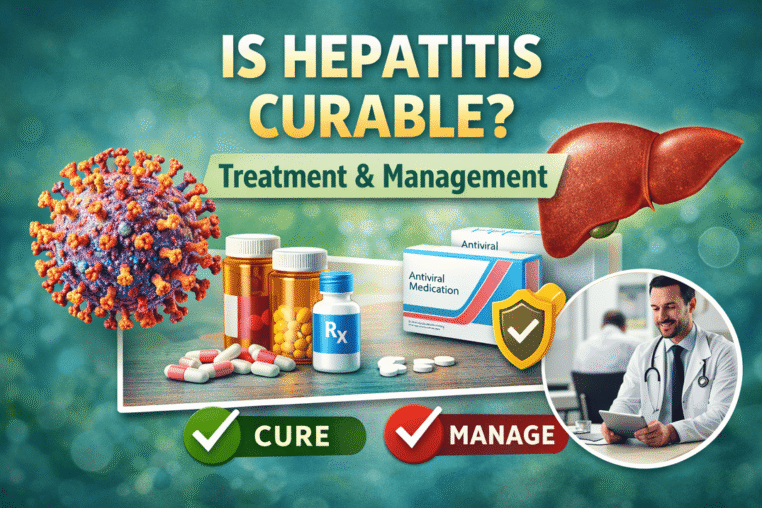
 A medical illness that causes soreness of the liver is known as hepatitis, most times as a result of viral infections. A familiar question most persons seek to know is: “Is hepatitis curable?” The answer vary on the kind of hepatitis and how fast it is noticed.
In this article, we’ll simplify the various types of hepatitis, if they could be a solution for the illness, and the safest, medically accepted ways to cure and handle the illness.
What Is Hepatitis?
Hepatitis is basically the soreness of the liver, most familiarly caused by infectious agent. The key types include:
- Hepatitis A
- Hepatitis B
- Hepatitis C
- Hepatitis D
- Hepatitis E
Each type differs in how it transmitted, how bad it is, and if it can be cured.
Is Hepatitis Curable?
The tendency of a cure relies on the exact type of hepatitis:
1. Hepatitis A – Usually Curable
Hepatitis A is usually a short-period condition.
- A lot of persons recover fully without long-period liver destruction
- The body system get rid of the infectious agent inherently
- Lifelong protection usually build up after revival
There is no exact antiviral medication, but assisting care helps the body system heal.
2. Hepatitis B – Manageable but Not Always Curable
Hepatitis B can be acute or deadly.
- Severe cases may fix on their own
- Deadly Hepatitis B is sometimes not entirely curable
- Notwithstanding, it can be properly handled with treatment
A lot of persons stay long, healthy lives with proper control.
3. Hepatitis C – Often Curable
Hepatitis C is now looked at as one of the most curable types.
- Advanced antiviral medication could treat over 90% conditions
- Medications typically lasts 8-12 weeks
- Quick discovery enhances success rates
This is one of the broad medical advances in liver condition medication.
4. Hepatitis D – Depends on Hepatitis B
Hepatitis D only happens in persons who already have Hepatitis B.
- Treatment is more difficult
- Handling Hepatitis B helps regulate Hepatitis D
5. Hepatitis E – Usually Self-Limiting
Hepatitis E mostly clears without major treatment.
- Most condition resolve without medication
- Deadly condition may require medical care
How Is Hepatitis Treated?
Treatment varies on the kind and extremity of the infection. Below are the most familiar method:
1. Antiviral Medications
For deadly viral hepatitis (especially B and C), medical practitioner may prescribe antiviral medications.
Benefits:
- Decrease the number of virus in the body system
- gradual liver destruction
- Lower risk of severe issues
For Hepatitis C, these treatment can drastically get rid of the infectious agent.
2. Supportive Care
For severe cases of hepatitis (like A and E), medications pays attention only on assisting the body system heal.
This includes:
- Enough rest time
- Drink clean water frequently (hydration)
- Consumption of balanced diet
The infection fighting agent(immune system) often clears the infection inherently.
3. Regular Medical Monitoring
Persons with deadly hepatitis need ongoing attention.
Monitoring includes:
- Blood tests
- Liver operation tests
- Imaging scans if essential
This helps discover severe issues quick and adjust medication when required.
4. Lifestyle and Home Care
Healthy lifestyle play an important part in medication and healing.
Recommended lifestyle changes:
- Eat balance diet meals
- Abstain from hard drinks totally
- Exercise frequently
- Get enough sleep (minimum of 8hours)
These lifestyle helps liver function and overall health condition.
5. Liver Transplant (Severe Cases)
In few and modern situations where the liver is severely hampered:
- A liver transplant may be needed
- This is usually for liver break down or modern cirrhosis
While serious, this alternatives can be life-saving.
Can Natural Remedies Cure Hepatitis?
It’s necessary to be careful here.
- There is no scientifically proven natural solutions for viral hepatitis
- Some natural approach(like healthy eating and hydration) can support healing
- Herbal solutions should only be used with the consent of medical personnel
Depending only on unverified medications can defer proper attention and worsen the situation.
Preventing Hepatitis
Protection is one of the best approach to steer clear of severe issues.
Key prevention tips:
- Get immunized(for Hepatitis A and B)
- Adhere to good hygiene
- Abstain from sharing needles or sharp objects
- Indulge in safe sex (use condoms)
- Make sure of safe blood transfusions
Protection is especially important because some types of hepatitis show no first signs.
Early Signs You Should Not Ignore
Even though some persons have no signs, watch out for:
- Constant tiredness
- Yellowing of the eyes or skin
- Dark urine
- Abdominal pain
- Throwing up or vomiting
If you observe these signs, seek attention of a medical personnel quickly.
Living with Hepatitis
Being confirmed with hepatitis doesn’t mean your life is over. With proper attention:
- A lot of persons live long, healthy lives
- Medications choices are enhancing every year
- Frequent check-ups help prevent severe issues
The major aspect is early detection, constant handling, and a healthy lifestyle.
Final Thoughts
So, is hepatitis treatable? The answer depends:
- Some kinds, like Hepatitis A and E, usually go off on there own
- Hepatitis C is often treatable with advanced medicine
- Hepatitis B and D may not be fully treatable but can be effectively handled
The most key step is to seek medical attention quick, adhere to medication plans, and adopt healthy lifestyle that support your liver.
Taking measures today can prevent your health and enhance your long-period living.