
 Written by
 Typhoid fever is a severe bacterial infection triggered by Salmonella Typhi, usually transmitted through infected meal and water. It still a general health issue in a lot of places of the world, including developing countries.
Even though medical medication (especially antibiotics directed by a doctor) is important for eradicating typhoid fever, A lot of persons look for natural means to assist healing and feel okay faster. In this documentry, we’ll analyze safe, natural procedures that can supplement medical support and assist your body system recover more successfully.
⚠️ Essential Note: Natural solution do not fill in for medical medications. Always seek the attention of a professional healthcare personnel for detection and medication.
Understanding Typhoid Fever Symptoms
Before indulging into solutions, it’s essential to notice the familiar signs of typhoid fever:
- Constant high fever
- Feeling tired regularly
- Abdominal complication
- Not always feeling like to take meal
- Headache
- Diarrhea or constipation
If you see these signs, specifically after taking in infected meals or water, seek medical attention fast.
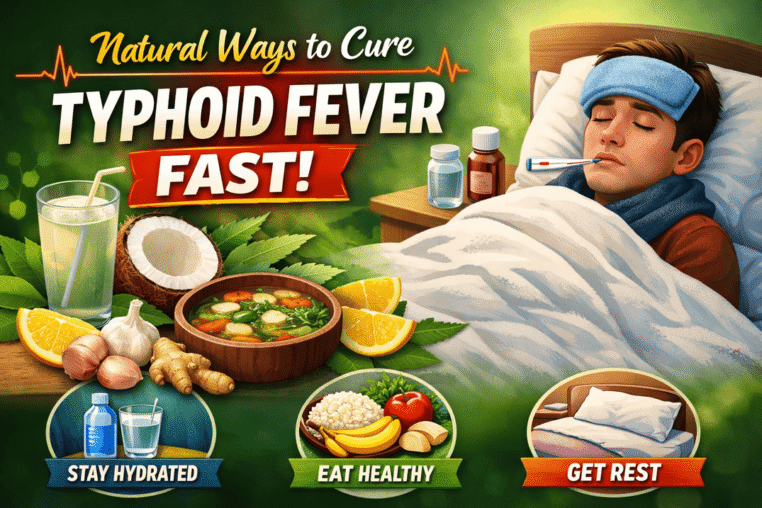
1. Stay Hydrated at All Times
One of the most essential natural approach to assist in healing from typhoid fever is proper water intake.
Typhoid often triggers dehydration due to fever, sweating, and digestive complications. Drinking enough water can go a long way in averting that:
- Frequent body temperature
- Do away with toxins from the body system
- Protect tiredness and dizziness
Best fluids to take:
- Clean water (boiled or filtered)
- Oral rehydration solutions (ORS)
- Coconut water
- Light herbal teas remedies
Abstain from sugary substances and caffeine, as they may worsen dehydration.
2. Eat Light and Nutritious Foods
Your digestive system becomes tender during typhoid, so consuming the right meals can fasten up healing.
Recommended foods:
- Soft meals like pap (akamu), rice, and boiled potatoes
- Fruits like bananas and apples (easy to digest)
- Vegetable soups and broths
- Yogurt (if tolerated)
These meals provide energy without impacting stress on your stomach.
Foods to avoid:
- Spicy or oily foods
- Street food or infected food
- Raw or unwashed vegetables
3. Get Plenty of Rest
Your body system requires energy to tackle infection. Adequate Rest is one of the most strong natural recovery tools.
- Sleep for at least 7–9 hours daily
- Abstain from stressful activities
- Limit physical exertion
Rest helps your immune system to focus on healing and reduces issues.
4. Maintain Proper Hygiene
Since typhoid transmit through infected meal and water, sustaining hygiene is crucial for both healing and protection.
Simple hygiene practices:
- Wash hands frequently with soap
- Consume clean drinking water
- Cook all meals Properly
- Keep your surrounding neat
Good hygiene prevent reinfection and protect others around you.
5. Use Herbal Support (With Caution)
Some herbs are commonly used to assist the immune system and relieve signs. While scientific proof may be limited, they can be used carefully alongside medical medications.
Common natural options:
- Ginger tea: may assist decrease nausea and enhance digestion
- Garlic: known for its antimicrobial properties
- Neem leaves (dogonyaro): commonly used in some cultures
- Basil (scent leaf): may assist immunity
⚠️ Always seek a healthcare professional attention before using herbal solution, specifically if you are on treatment.
6. Boost Your Immune System Naturally
A strong immune system assist your body heal faster.
Ways to boost immunity:
- Eat fruits rich in vitamin C (oranges, guava)
- Always Stay hydrated
- Get enough sleep( minimum of 8 hours)
- Abstain from alcohol and smoking
These simple lifestyle can make a big impact in how quickly your body tackles infection.
7. Monitor Your Temperature
Typhoid fever is known for its constant high temperature. Check your fever assist you track progress.
Tips:
- Use a thermometer frequently
- Take doctor-prescribed treatment for fever
- Use a lukewarm sponge bath if need be
Abstain from self-medicating without expert advice.
8. Avoid Self-Medication
One of the huge mistakes people make is trying to treat typhoid without proper detection.
- Do not take antibiotics without doctors consent
- Abstain from random herbal mixtures of unknown origin
- Always follow your medical personnel instructions
Improper medicals attention can lead to severe issues or antibiotic resistance.
9. When to Seek Medical Help
Even if you are going with natural support approach, you must seek medical care if:
- Fever lasts more than a few days
- You experience severe abdominal issues
- There is constant throwing up or diarrhea
- You feel completely tired or confused
Typhoid fever can become life-threatening if not taken seriously .
Conclusion
While typhoid fever is still proper medical medication, natural approach can play an assisting role in fasten up healing. being hydrated, eating nutritious meals, resting well, and keeping hygiene are simple but strong ways to help your body system recover.
Do not forget, the motive is not to exchange medical attention but to support it with proper and healthy lifestyle routines.
By joining proper medication with these natural procedures, you can heal quicker and decrease the risk of issues.